My view of power is one that hopes for responsibility. Like the scene depicted in, “Farmer and the Bird”, I think that having power is all well and good. But you should use that power responsibly. You can be powerful and be gentle.
However, others disagree. Some folks think they should go full Animal Farm. In a rebuttal of that way of thinking, I offer three stories about power in three different styles:
The Emperor’s New Clothes
(In case you need visuals.)
Once upon a time there was an emperor. The emperor thought quite highly of himself. He knew he was the best. That he was the grandest. That none compared to him.
Along came a tailor. The tailor had some idea of the emperor’s mind. The tailor brought in boxes and boxes of clothing. He pulled them out. And what the emperor saw astonished him. For all he saw were empty hangers. Before the emperor could speak, the tailor confided, “Of course, you already know this, but just so you know that I know, these clothes can only be seen by the most brilliant of men. Fools, children, the rabbits of the field; they will not be able to see how grand you look. For only the refined mind can perceive the elegance and beauty of these threads. Imagine what it must be like, to not be able to see the resplendent visage that you grace the commoners with! Oh, what a pity to be as dull-witted as those peons.”
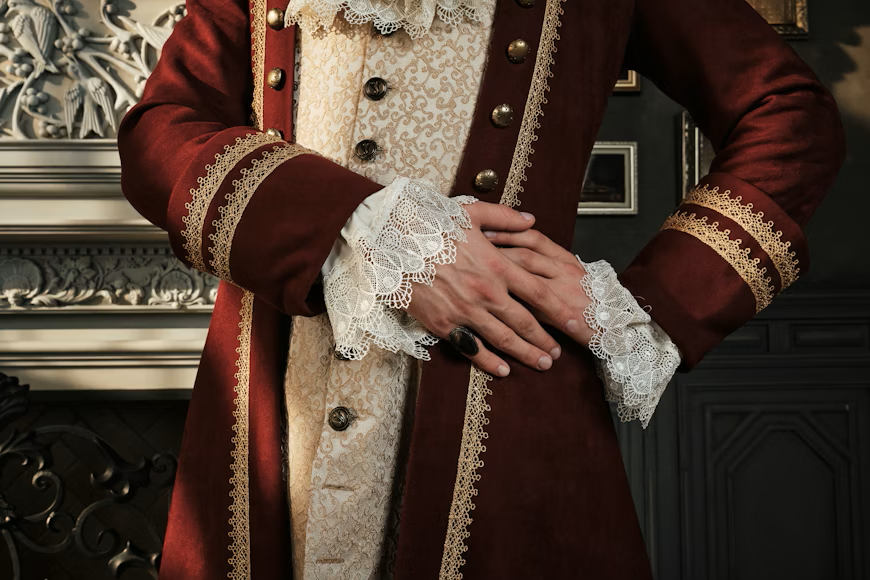
The emperor was stunned. He was glad that he had not said anything. Surely a meager tradesman like the tailor could not be allowed to make a fool of him. He must have come from a distinguished family that he knew so much of the miracles and finery of fashion. The emperor quickly joined in and praised the clothing that the tailor showed him. Each new robe and pair of shirts was met with accolades and enthusiasm.
The emperor called in his attendants, his advisors, even his neighbors. He declared that he had never, in all his blessed and glorious years, seen such wondrous creations. That only an emperor such as himself could be allowed to wear the clothing that the tailor had brought. The loyal subjects responded in kind. They oohed, aahed, and clapped as each new hanger was shown. They loudly agreed that surely the emperor alone was worthy of the beautiful clothes. They insisted that he treat himself, that the tailor sell the emperor all that he had brought. Then no one could ever try to look as grand as the emperor; their beloved, cherished, and most worthy emperor.
Before anyone could offer an alternate opinion, a parade was ordered. The tailor picked out his favorite, and most expensive, items for the emperor to don. The emperor, marveling at how lightweight the fabric was and swooning over how agreeable the cloth was on his delicate skin, was soon strolling down the main stretch of the kingdom. The royal attendants went ahead of him, yelling and declaring the rare thrill that the simple folks were being treated to. A presentation of garb that only the wisest, most cultured, and most civilized people could truly appreciate.
The townsfolk cheered. They gasped. They applauded the craftmanship that was evident in every stitch and every crease that they beheld. No one could believe their luck. That they, of all people, should be alive to see such a sight.
Until one boy spoke up. “Mum! He’s in his underwear, mum! He’s got no clothing at all!”
The mother tried to quiet her boy. He would not be quieted. He laughed and laughed. He rolled in the dirt, grabbed his stomach with glee, and laughed and rolled, rolled and laughed.
It was too much. The townsfolk laughed at the lad. At themselves. And at the emperor. The ruse was uncovered, just as the emperor was. They all laughed, from the lowliest peon to the highest attendant. Even the emperor’s wife was left with a huge grin stuck on her face.
The tailor, having snuck out as soon as the procession started, could hear the uproar from far down the road.
David and Bathsheba
(Scriptures found in 2 Samuel, chapters 11 and 12.)
David was a name that was known throughout the land.
Beat Goliath when the giant was out of hand.
He became the king. It was not enough for him.
Seven wives? Yeah, he seemed to marry on a whim.
He saw Bathesheba and the two of them had sex.
(He ignored that her husband was not an ex.)
When she told David that their kid was on the way
He thought of sending Uriah into the fray.

Uriah was loyal. He was good. He was true.
He deferred to his King as soldiers should do.
And David? He wanted the husband’s blood spilled.
Uriah was made to fight until he was killed.
David got the woman, and the two had their kid.
It should be no surprise- God knew what David did.
God talked to Nathan, He clued him in on God’s plan.
Then Nathan went to go see the mighty king-man.
Nathan told of two men, their wealth, and also sheep.
He told of a simple man and a big ol’ creep.
The rich man cruelly stole the poor man’s only ewe,
So he could keep all his and still serve his guest stew.
David burned with anger that was fit for a king.
Until Nathan pointed out, “You did the same thing!
God sees everything under the moon and sun.
He will call you to answer for what you have done!”
Richard Nixon and David Frost
If you need a refresher, here ya go:
The dramatized version:
Which, because life is stranger than fiction, is not far off from the real thing:
Three stories of three powerful men. It does not matter the time. It does not matter the place. What matters is that great power must be wielded responsibly and wisely.
 ...Of Course, this Could All Go Horribly Awry
Leave a comment